
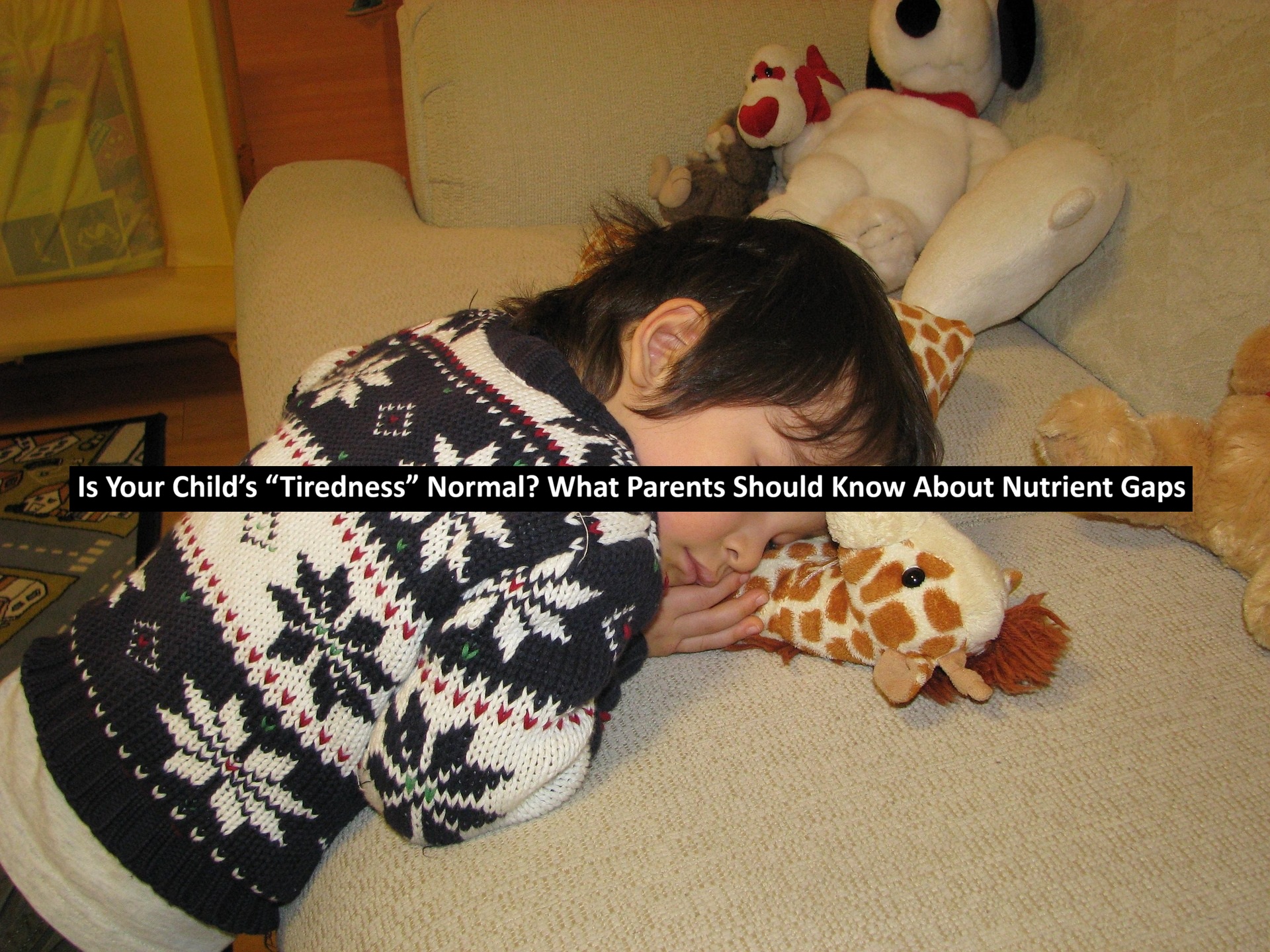
Is Your Child’s “Tiredness” Normal? What Parents Should Know About Nutrient Gaps
It’s not unusual to see your child get tired after a busy day. But when your child seems unusually irritable and consistently fatigued, it may mean something more serious. The challenge falls to parents to distinguish between normal “tiredness” and a signal of a deeper issue that demands more attention.
In 2020, the Centers for Disease Control and Prevention (CDC) conducted a study that found that 3.5% of children aged 5 to 11 years and 10.9% of kids aged 12 to 17 years feel tired every day or most days. If you’re one of the parents who believe their kids are part of that percentage, addressing it immediately is the best move.
While tiredness is normal in children, with growth spurts and busy school schedules, it’s a completely different issue when it becomes long-term and ongoing. If your child’s tiredness doesn’t go away after a restful sleep, it may point to underlying nutrient gaps you should never ignore.
What Does A Child’s Normal “Tiredness” Look Like
Normal “tiredness” refers to the kind of fatigue that goes away after a good night’s sleep. It may be caused by one or several of the following:
- Heavy physical activities
- Growth spurts
- Full-packed school schedule
- Emotional and mental stress
If your child stayed up late or had poor sleep quality, it can also lead to tiredness the next day. Irregular bedtimes and inconsistent routines disrupt a child’s restorative sleep. Make sure your children get enough sleep (9 to 12 hours for kids under 12 and 8 to 10 hours for teens).
Read: How Flossing Impacts Your Overall Health?
Common Nutrient Gaps Linked to “Tiredness” in Kids

If it’s not “normal” tiredness experienced by your child, it may be a nutrient gap. This refers to the differences between the nutrients your child is consuming and what’s needed. Children show this nutritional deficiency through fatigue and constant tiredness.
Iron deficiency tops the list of leading nutritional causes of low energy and tiredness in children. Iron in the body is responsible for red blood cell production and the transport of oxygen throughout the body. When a child doesn’t have enough iron in the body, she becomes uninterested in daily activities, feels unusually tired, and experiences lethargy.
Besides iron deficiency, consistent tiredness may also be a sign of low vitamin D and B12 levels in the body. Make sure that your child doesn’t miss out on the important nutrients that a growing body needs. Recognizing the early signs of this nutrient gap will help prevent future health issues.
More Than Normal “Tiredness”: Red Flags to Watch For
How do you know if you need to pay more attention to your child’s tiredness? Before making any assumption, it’s best to ask experts in the medical field. Set up a schedule with your physician if you observe the following red flags:
- Feels fatigued even after 10 to 12 hours of sleep for children younger than 12 years and 8 to 10 hours of sleep for teens
- Changes in appetite and behavior
- Frequent headaches, shortness of breath, and dizziness
- Poor concentration
- Dark circles under the eyes and pale skin
All of these signs may mean your child’s tiredness is not normal. Check whether the tiredness doesn’t go away after a good night’s rest and after swapping to better habits every morning. If the tiredness persists, it’s time to do something about it to prevent it from worsening.
Bridging Your Child’s Nutrient Gaps

The key to addressing your child’s fatigue and unusual tiredness is to bridge the nutrient gap. Here are the steps to take if you want to guarantee success in correcting micronutrient shortfalls in your child.
Take Your Child to a Physician
It’s important to take your child to the doctor after one to two weeks of consistent fatigue. Ask your physician to conduct the following observations and examinations:
A thorough assessment of the history of fatigue and possible causes of your child’s tiredness, such as:
- Sleeping habits
- Activities that can cause anxiety or stress
- Packed daily schedule
Meticulous physical examination (Pay attention to your child’s growth and development)
Necessary laboratory tests needed depending on your child’s symptoms, including but not limited to the following:
- Blood tests
- Imaging
- MRIs
- Urine tests
- X-rays
Take into account the possibility of needing the help of a mental health professional.
While your child’s unusual tiredness may be nothing serious, it’s better to be on the safe side. Ask your physician’s opinion to ease your worries and help you know the next steps to take.
Help Your Child Feel More Energized
The good thing about most cases of fatigue in children is that, as parents, there are things you can do to help them. One of the most effective solutions is to improve your child’s lifestyle to be healthier. Consider the following changes:
- Set Up Consistent Bedtimes: Establish routines for every morning and night, and set specific wake-up and sleeping times to promote restful sleep.
- Introduce Well-Balanced Meals: Bridge your child’s dietary gap by including foods rich in the nutrients they’re lacking. For iron, add lean meats, leafy greens, and beans. For vitamins B12 and D, consider serving fatty salmon, eggs, and fortified dairy products.
- Reduce Screen Time: Keep your child away from smartphones and other screens, especially at night, for better melatonin production.
- Encourage and Promote Physical Activity: Go outdoors for exercise and some sunlight exposure to improve energy and sleep quality.
Talk to your child when making these changes. Include them in your plans and ask for their opinions as you make them.
Consider Giving Your Child a Health Supplement
Bridge your child’s dietary gaps by considering giving them supplements. Dietary supplements can improve one’s overall well-being and help your child get the nutrients they lack. Consider getting Neupril Kids Methylfolate to promote restful sleep and boost your child’s energy.