
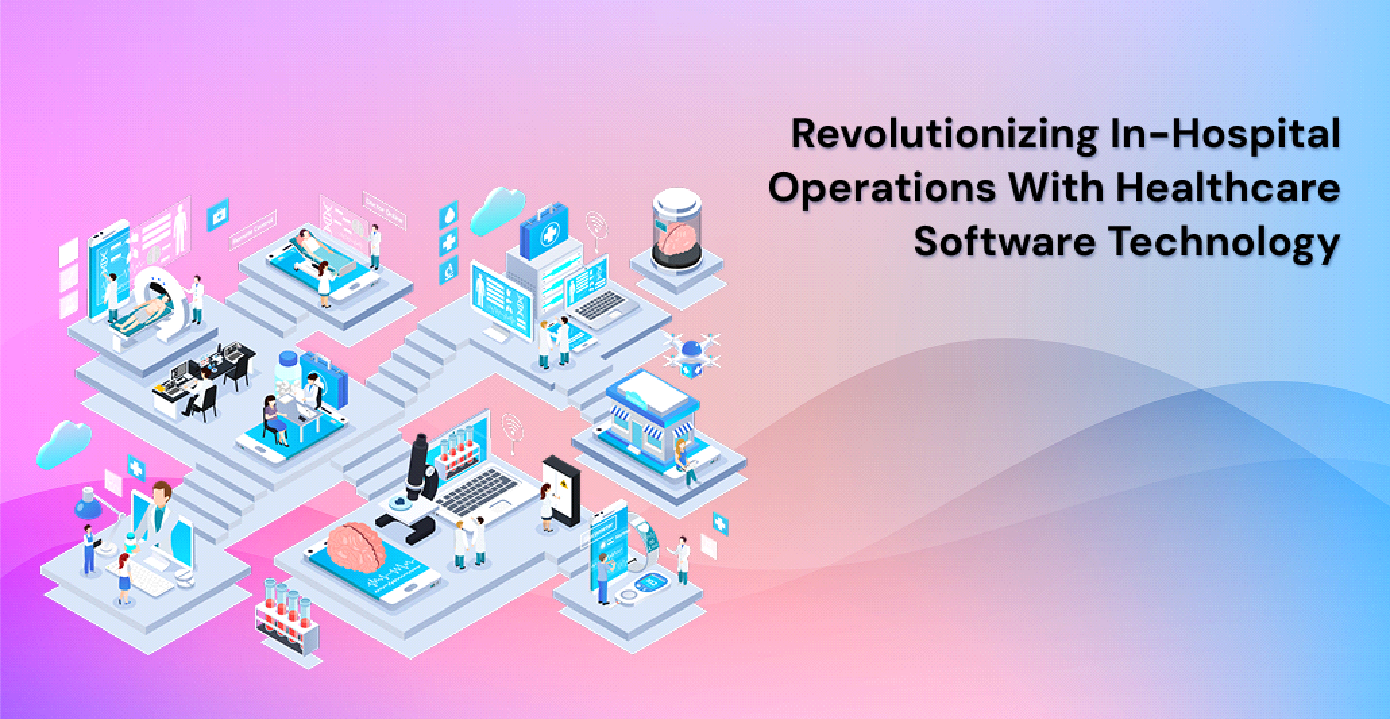
Revolutionizing In-Hospital Operations with Healthcare Software Technology
Other than hospital operations, healthcare software technology is transforming the delivery and coordination of care. Hospital Management Systems in Healthcare use the hospital’s processes to optimize, streamline patient management, and achieve maximum precision in data. Hospital software applications are now advanced, automating administrative and clinical processes, ensuring hospital environments are integrated and more efficient.
A sophisticated Hospital Management System offers real-time access to patient information, resource utilization, and performance metrics to enable hospitals to operate effectively with world-class quality care and regulatory conformance.
Understanding Hospital Management Systems
Hospital Management Systems in Healthcare are comprehensive computerized systems that automate, combine, and simplify day-to-day hospital and clinic operations. They ensure smooth interdepartmental coordination, minimize paperwork, and improve decision-making through real-time data at their command. From patient registration to discharge, billing, diagnosis, and inventory control, everything is done conveniently through a single interface.
Hospital software management not only mechanizes administrative efficiency but also enhances clinical processes to deliver enhanced patient care, reduced wait time, and best possible resource utilization. Integrated with inherent capabilities like Electronic Medical Records (EMR), scheduling, and integration with the pharmacy, these systems reengineer healthcare center operations.
Hospital Management Software is growing at a tremendous rate in India because of the need for healthcare digitalization. Solutions are being adopted by hospitals in urban as well as rural areas of the nation to augment care provision and stay in sync with the paradigms of healthcare legislation. Extremely scalable and flexible, modern HMS platforms are custom-made to address the exact requirements of small clinics to multi-specialty group hospitals.
Overall, Hospital Management Systems form the backbone of the digital health toolkit. By providing transparency, efficiency, and data-driven decision-making, they form the backbone behind streamlining in-hospital operations and providing improved patient and operational outcomes.
Read: Achieving Your Dream Smile with the Best Invisalign Braces
Core Functions of a Modern Hospital Management System
A Hospital Management System Software seeks to consolidate all hospital processes under one umbrella and automate them in such a way that healthcare delivery is improved and patient-centered. There are integrated current systems plus several core functions that enable administrative and clinical operations.
1. Patient Registration and Electronic Health Records (EHR):
New hospital computer systems begin from registering patients and possessing accurate, sharable Electronic Health Records. That provides easy access to patient history, laboratory test results, medications, and treatment plans across facilities.
2. Appointment and Scheduling Management:
Appointment and Scheduling Modules significantly cut down patient waiting times and physician time and resource utilization. This maximizes patient satisfaction and surgical planning.
3. Billing and Insurance Processing:
Billing Modules integrated control all billing, insurance claim, and payment issues accurately and transparently and minimize manual errors and revenue loss.
4. Pharmacy and Inventory Control:
The system stores the amount of medications, their expiration dates, and sources. The alerts provide maximum inventory levels and stock out disaster avoidance.
5. Laboratory and Radiology Management
HMS facilitates laboratory and radiology processes from reporting results to ordering, avoiding delays and improving diagnostic accuracy.
6. Data Security and Compliance:
Leading hospital software providers ensure their solutions comply with medical data safety regulations, protecting patient data and regulation adherence.
Benefits of Hospital Software Systems
Hospital software systems, once installed, confer a massive advantage on administrative and clinical operations within health facilities. They help to automate activities, reduce errors, and foster an organization culture that is patient-centered.
The biggest advantage is increased efficiency. Allowing for automatic operations like patient registration, appointment scheduling, billing, and discharge allows the hospitals to reduce errors and paperwork. This translates to saving patient and staff time with efficient day-to-day practices.
Improved data management is another advantage. Centralized databases provide physicians with immediate patient data, medical history, and treatment status in front of them. This facilitates rapid decision-making and coordinated interdepartmental care.
Hospital software management also facilitates effective hospital financial management. Integrated insurance processing, inventory, and billing facilitate clear and accurate transactions, which halt revenue leakage and enhance financial planning.
Security and compliance are also improved. The online hospital management system secures the information and makes it available only to licensed staff members for enabling healthcare professionals to comply with data privacy acts.
There is a more and more pressing need for digital health in India. The most sophisticated hospital software on offer today in India is scalable and configurable, appropriate for small clinics to big multi-specialty hospitals, multi-language support, user-friendly interfaces, and cloud-based accessibility.
The Healthcare Software Technology of the Future
The future of health is an intelligent, connected, and automated health system that improves patient care and drives business performance. Hospital software administration is being revolutionized at a very rapid pace with the implementation of technologies like artificial intelligence (AI), machine learning (ML), cloud computing, and Internet of Things (IoT). These emerging technologies will rewire hospital operations to be predictive, personalized, and efficient.
Artificial intelligence decision support systems will help doctors with faster and more accurate disease diagnosis by reviewing patient histories, test results, and global health data patterns. Hospital networks will feature wearables and remote monitoring offering real-time feedback on patients’ health to give anticipatory care.
Hospital management software in the cloud will make off-site access to information possible, enhancing site and departmental coordination. Telemedicine facilitated by secure software platforms will help increase specialist care access, especially in rural markets with decreased access to care.
The highest benefit of future hospital management systems will be more patient engagement. With the use of patient portals and smartphones by patients, patients can become proactively engaged in their care process—reviewing reports, booking appointments, and receiving real-time messages.
In summary, the future of healthcare software technology is smarter, more integrated, and secure systems of care. It makes the hospitals flexible, scalable, and better positioned to handle the rising demands of healthcare today.
Conclusion
In all, in-hospital workflows are reengineered by the application of healthcare software technology leading to increased efficiency, accuracy, and patient satisfaction. Hospital software applications implement clinical and administrative processes to facilitate intelligent decision-making and improved outcomes. From simple access to information to better management of resources, the impact is revolutionary. Hospital Management System Software implementation is not a choice—it’s the key to delivering high-quality, technology-enabled care in today’s fast-paced health environment.
Author’s Bio:
Hello, I am Yash Italiya, an SEO Executive at Healthray Technologies Pvt. Ltd. a company that provides cutting-edge healthcare solutions such as the Hospital Management System, Hospital Information Management System, EMR Software, EHR Software, Pharmacy Management System, and Laboratory Information Management System.