
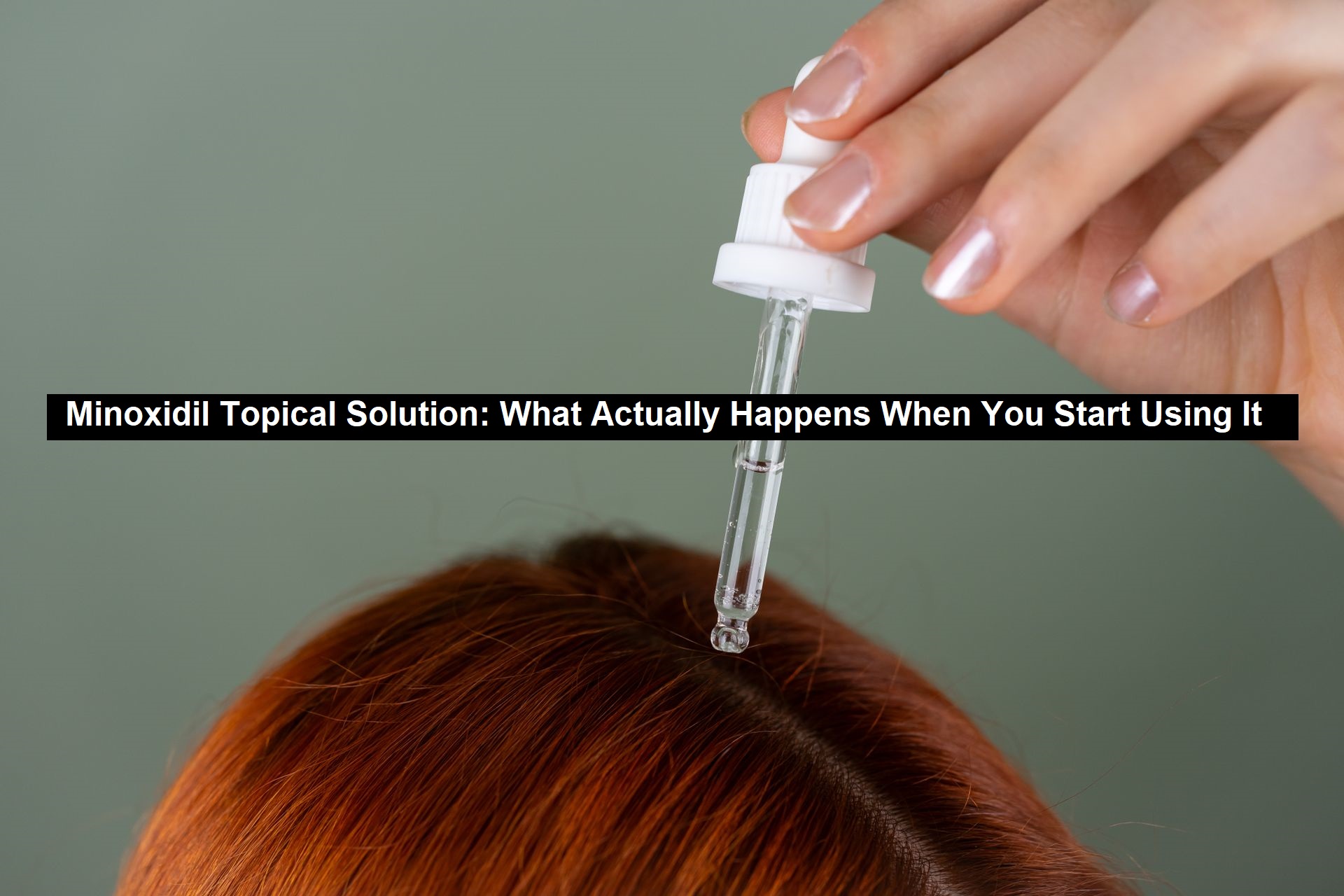
Minoxidil Topical Solution: What Actually Happens When You Start Using It
A thinning crown at 29 is a very common story. A lot of men will spend six months or so just pretending it’s not happening, then another few months getting increasingly inventive with their phone camera to try and check the extent of the damage. By the time they actually do something about it they’ve often convinced themselves it’s too late and that’s rarely the case at all.
It’s an extremely common scenario. Approximately half of all men in the UK will have some degree of male pattern baldness by the age of 50 and there’s no shortage of women who experience thinning hair as well (though they’re far less likely to talk about it). Minoxidil is one of the very few treatments that actually has good evidence to support its use and it’s been on the market since the late 80s which is far longer than most people realise.
Where minoxidil came from
The rather odd story is that minoxidil was actually developed as a blood pressure tablet. People taking it orally started to grow hair in all sorts of places and the researchers saw an opportunity. The topical version came next, applied to the scalp rather than swallowed.
Nobody is entirely sure of the full mechanism (though that’s the theory that’s currently accepted). The idea is that it works by widening the blood vessels around the hair follicle and thereby putting the follicle into a longer growth phase. In some instances follicles which have shrunken over time can actually start to produce thicker strands again.
There’s a certain comfort in a drug working for decades and yet scientists still not quite knowing why it works. Paracetamol is very much the same.
The bit nobody warns you about
Shedding. In the first few weeks you’ll actually be losing quite a bit of hair (as bad as that sounds). It’s just the old hairs being shed to make way for the new ones to grow in, though that doesn’t really make it any less of a problem when you’re looking at a plughole full of hair at 7am.
Patience is the other thing. The standard advice is to give it at least four months before you start to assess results and in many cases you’d be better to go closer to a year to get the full picture. Week eight is a very common point at which people give up and that’s far too early to be drawing any conclusions either way.
The routine is important too. Minoxidil only works whilst you’re using it so if you stop, any regrowth you’ve got is likely to regress over the ensuing months. That’s the reality of the situation and it’s what puts a lot of people off completely.
Side effects worth knowing
The most frequent complaints are of an itchy, flaky scalp (this is usually down to the propylene glycol in the formulation rather than the minoxidil itself). Some people find the foam versions to be gentler. Less commonly, unwanted hair can grow on the face if the solution drips or transfers onto your pillow so it’s worth making the habit of letting it dry properly before going to bed.
Anyone with a cardiac condition should definitely speak to a clinician first given where the drug comes from. The same applies to anyone who is pregnant or breastfeeding.
Read: Creating a Successful Health Plan as an Expat in the UK
Combining treatments
Minoxidil looks at the growth side of things but doesn’t do anything about DHT (the hormone that’s largely to blame for the miniaturisation of the follicle in male pattern hair loss). Finasteride does that so it’s not unusual to see the two used in conjunction.
Oral finasteride has put off some men due to the side effect concerns so in recent years combined topical formulations have taken over. If you’re at all interested in how a minoxidil topical solution combined with finasteride works in reality then it’s worth looking into how it’s actually prescribed as the finasteride component means you do need a proper consultation rather than just picking up a bottle off the shelf.
Standalone minoxidil on the other hand is available over the counter in most UK pharmacies. The prices vary enormously, from around £15 for a month’s supply of the generic 5% solution right up to £40 or more for the branded version and the active ingredient is the same in either case.
Is it worth trying?
It really comes down to how much the hair loss is an issue for the individual. Some people will simply shave their heads, be absolutely fine with it and just go on with their lives. Others find the thinning actually has a real impact on their self confidence and there’s absolutely nothing wrong with wanting to do something about it.
Start earlier and it’s generally better. Minoxidil is far more effective at maintaining existing hair and thickening miniaturised hairs than it is at actually regrowing a complete bald patch. To “wait and see” for a few years is generally going to leave you with less to work with.
For the ones who persevere through the shedding and the rather slow first few months, a genuinely fuller crown is very much a possible outcome. The phone camera checks tend to cease quite soon after that. Mostly.